Nieuwe stimulatie-methode effectiever tegen hersen- en zenuwaandoeningen

Persbericht van de TU Delft, uitgegeven vandaag (23 april 2015):
Nieuwe stimulatie-methode effectiever tegen hersen- en zenuwaandoeningen 

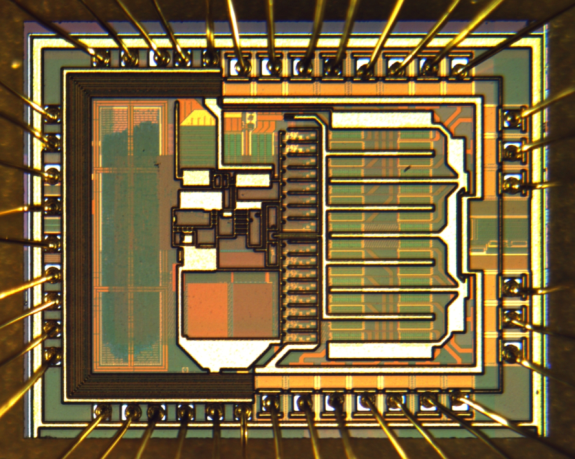
HF_stimulatorHersenstimulatie wordt tegenwoordig succesvol toegepast ter bestrijding van ziektes als Parkinson, chronische depressie, pijn en tinnitus. Door neurostimulatoren energiezuiniger en kleiner te maken, kunnen ze doelgerichter en voor een groter scala aan hersen- en zenuwaandoeningen worden ingezet. Marijn van Dongen maakte een prototype van een chip waarmee deze vorm van neurostimulatie kan worden toegepast. Hij promoveert op vrijdag 24 april op dit onderwerp aan de TU Delft. 

Parkinson

Hersenstimulatie wordt tegenwoordig succesvol toegepast ter bestrijding van ziektes zoals Parkinson, chronische depressie, pijn en tinnitus en er zijn aanwijzingen dat hersenstimulatie ook succesvol kan zijn in de behandelingen van nog veel meer hersenaandoeningen, zoals epilepsie, verslavingen, migraine en dementie. Veel bestaande neuro-stimulatoren hebben echter een beperkte energie-efficiëntie, waardoor een grote batterij nodig is. Een grote batterij maakt de hele neurostimulator groot waardoor deze niet op de plaats geïmplanteerd kan worden waar de stimulatie ook daadwerkelijk nodig is. Vaak verbinden onderhuidse draden de neurostimulator in de borst met de elektroden in de hersenen.

HF

Daarom is aan de TU Delft een nieuwe manier van neurostimulatie onderzocht: hoog-frequente (HF) neurostimulatie. De doelmatigheid van deze HF-stimulatie in aangetoond via simulaties en met in-vitro-metingen (in samenwerking met de afdeling Neurowetenschappen van het Erasmus Medisch Centrum). HF-stimulatie heeft hetzelfde effect op weefsel als klassieke stimulatie, alleen kan HF-stimulatie energiezuiniger zijn. De batterij kan daarmee kleiner worden en er zijn minder ruimte-verslindende componenten nodig.

Pulsjes

‘In mijn promotieonderzoek hebben we gefocust op nieuwe stimulatie-patronen die efficiënt opgewekt kunnen worden’, zegt Marijn van Dongen. ‘In plaats van met een constante stroom, stimuleren we de hersenen met een serie hoogfrequente stroom-pulsjes. Dit soort pulsjes kunnen op een energie-efficiënte manier worden opgewekt dankzij het principe van een geschakelde voeding. We hebben een energiezuinige neurostimulator-chip ontworpen die tot wel 200% energiezuiniger kan zijn dan zijn klassieke tegenhangers. Hierdoor kunnen toekomstige neurostimulatoren kleiner worden gemaakt en daarmee voor een groter scala aan hersen- en zenuwaandoeningen worden ingezet. Bovendien kunnen deze pulsjes verschillende doelen tegelijkertijd activeren en daarmee de doelmatigheid van de neurostimulatie verhogen.’

Prototype

Er is een prototype chip ontwikkeld waarmee deze vorm van neurostimulatie kan worden toegepast. In samenwerking met neurowetenschappers van het Erasmus Universitair Medisch Centrum, de University of Texas at Dallas (VS) en de University of Otago (Nieuw-Zeeland) is de methode succesvol geverifieerd.

Colloquium

Voorafgaand aan de promotie van Marijn van Dongen is er een colloquium over neurostimulatie door prof. Dirk De Ridder: the future of brain, spine and nerve stimulation. Prof.dr. Dirk De Ridder bekleedt de Neurological Foundation Chair in Neurosurgery aan de Dunedin School of Medicine, University of Otago, Nieuw-Zeeland (vrijdag 24 april, 10.00-11.15 uur; Snijderszaal: EWI-LB01.010, TU Delft).

Meer informatie
Voor meer informatie neemt u contact op met Marijn van Dongen, afdeling Micro-Elektronica van de faculteit Elektrotechniek, Wiskunde en Informatica, M.N.vanDongen@tudelft.nl, 06 – 435 70479 of met Claire Hallewas, wetenschapsvoorlichter TU Delft, C.R.Hallewas@tudelft.nl, 015 – 27 84259. Het volledige proefschrift vindt u op de TU Delft repository.”

Electroceuticals: the Shocking Future of Brain Zapping

Electroceuticals are the electronic counterparts of pharmaceuticals

“It’s all in your head—those icky feelings, all that fog—and chemicals just aren’t that great at cutting through. That’s why scientists are experimenting with changing the brain game by tweaking its circuitry, rather than the chemical processes.

It might be a bit unnerving to us seasoned pill-poppers, but some believe that electrical currents could be the new wave in everything cerebral, from treating depression and addiction to enhancements that would enable those seeking that mental edge to learn new skills faster or remember more.”

Read more at: http://motherboard.vice.com/read/electroceuticals-the-shocking-future-of-brain-zapping.

Future hardware improvements in implantable hearing devices

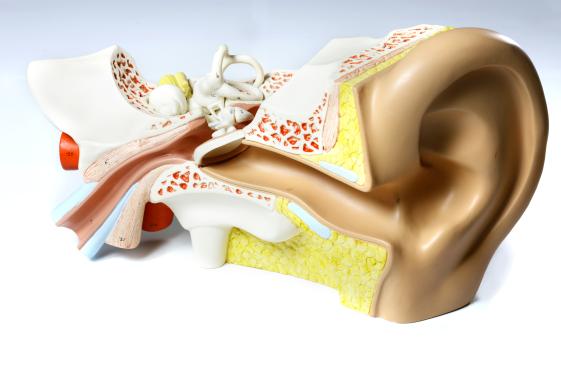
Damaged situation of the middle and inner ear; hair cells are damaged or non-existent, nerve cells are not fully developed or do not reach the cochlea [3].

Damaged situation of the middle and inner ear; hair cells are damaged or non-existent, nerve cells are not fully developed or do not reach the cochlea [3].

In this essay, by Ide Swager, MSc student in bioelectronics, an overview of current and future developments in implantable hearing devices is presented. It has been written as part of the course Introduction to Microelectronics for the M.Sc. track Microelectronics of the faculty Electrical Engineering, Mathematics and Computer Science of Delft University of Technology. A brief version of the auditory anatomy is included to clarify the causes of deafness. After elaborating on the current devices available and the basic working principle, future trends are explored. These include Neural Response Telemetry (NRT), combined Acoustic and Electric Stimulation (EAS) and binaural devices.

Read the full essay here: http://elca.et.tudelft.nl/~wout/tmp/iswager_essay.pdf

Cochlear implant development going at a rapid pace (in Dutch)

Uit “De Audiciens”, februari 2015: “CI’s (cochleaire implantaten, Red.) volop in ontwikkeling.

Het is een traditie, de refereeravond van KNO/Centrum voor Audiologie en Hoorimplantaten (CAHIL) in het LUMC op de tweede donderdag van het jaar.

Ook op 8 januari 2015 zit de collegezaal weer vol. Het is dan ook een bijeenkomst waar een aantal disciplines uit de hoorbranche samenkomen. KNO-artsen, audiologen, akoepedisten, audiciens, fabrikanten en anderen luisteren naar voordrachten die inzicht geven in nieuwe ontwikkelingen op audiologisch gebied.

De avond wordt geopend door prof. dr. ir. J.H.M. Frijns, hoofd CAHIL. (…) In het kader van de Medical Delta (een samenwerkingsverband tussen het Erasmus MC in Rotterdam, de TU Delft en het LUMC in Leiden voor de ontwikkeling van medische technologie) is er een presentatie van Johan de Vos die als arts-onderzoeker KNO onderzoek verricht naar nieuwe technologie voor cochleaire implantaten. Onder begeleiding van Wouter Serdijn en Paddy French hebben drie promovendi van de TU een meetversterker (Cees Jeroen Bes), een elektrode ontwerp (Nishant Lawant) en een stimulatorchip (Wannaya Ngamkham) ontwikkeld. Deze technologie wordt onder leiding van Johan Frijns en Jeroen Briaire in het LUMC geimplanteerd en getest door Johan de Vos. Tevens ontwikkelt het LUMC nieuwe meetmethodes voor het terugmeten van de respons van de gehoorzenuw (Dick Biesheuvel).”

Lees meer hier.

We cured several mice from epilepsy!

The cerebellum might be able to stop epileptic seizures

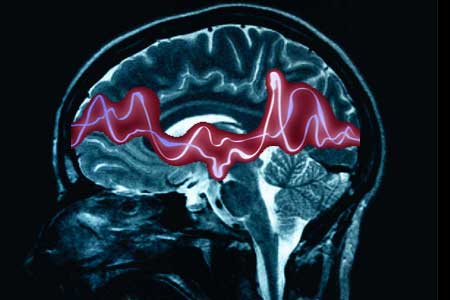
A single short-lasting (30-300 ms) optogenetic stimulation of the cerebellum (the small brains) abruptly stopped generalized spike-wave discharges (GSWDs) as occur, e.g., in absence epileptic seizures, even when applied unilaterally. Using a closed-loop system absence seizures were detected and stopped within 500 ms.

If you want to read more about the neuroscientific aspects, click here. If you want to read more about the epilepsy detector we developed, click here.

We are now working on our next mission: to reliably detect other forms of epileptic seizures and to study cerebellar nuclei further and their potential therapeutic benefit for controlling other types of generalized epilepsies.

Exciting times ahead, if you ask me, and not only for mice.

Cerebellar output controls generalized spike-and-wave discharge occurrence

Cerebellar output controls generalized spike-and-wave discharge occurrence.

Abstract

OBJECTIVE:

Disrupting thalamocortical activity patterns has proven to be a promising approach to stop generalized spike-and-wave discharges (GSWDs) characteristic of absence seizures. Here, we investigated to what extent modulation of neuronal firing in cerebellar nuclei (CN), which are anatomically in an advantageous position to disrupt cortical oscillations through their innervation of a wide variety of thalamic nuclei, is effective in controlling absence seizures.

METHODS:

Two unrelated mouse models of generalized absence seizures were used; the natural mutant tottering, which is characterized by a missense mutation in Cacna1a, and inbred C3H/HeOuJ. While simultaneously recording single CN neuron activity and electrocorticogram (ECoG) in awake animals, we investigated to what extent pharmacologically increased or decreased CN neuron activity could modulate GSWD occurrence and short-lasting on-demand CN stimulation could disrupt epileptic seizures.

RESULTS:

We found that a subset of CN neurons shows phase-locked oscillatory firing during GSWDs and that manipulating this activity modulates GSWD occurrence. Inhibiting CN neuron action potential firing by local application of the GABAA -agonist muscimol increased GSWD occurrence up to 37-fold, whereas increasing the frequency and regularity of CN neuron firing with the use of gabazine decimated its occurrence. A single short-lasting (30-300 ms) optogenetic stimulation of CN neuron activity abruptly stopped GSWDs, even when applied unilaterally. Using a closed-loop system GSWDs were detected and stopped within 500 ms.

INTERPRETATION:

CN neurons are potent modulators of pathological oscillations in thalamocortical network activity during absence seizures and their potential therapeutic benefit for controlling other types of generalized epilepsies should be evaluated.

This article is protected by copyright. All rights reserved.

© 2015 American Neurological Association.

PMID: 25762286
[PubMed – as supplied by publisher]

How to optimize the antenna-electronics interface

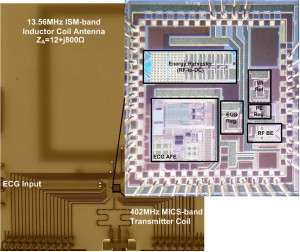
Autonomous Wireless ECG Sensor Node by Andre Mansano and Yongjia Li

Autonomous Wireless ECG Sensor Node by Andre Mansano and Yongjia Li

During the design process of a wireless system, the antenna and electronic circuit designers sometimes are operating independently from each other and considered to belong to separate disciplines. Both designers agree upon a common characteristic impedance (Z0) of the antenna electronics interface and subsequently optimize their part of the system. The electronic circuit often requires an impedance transformation network while the antenna usually is directly matched to the characteristic impedance of a transmission line to avoid propagation effects in the interface. Traditionally, this characteristic impedance is commonly assumed to be 50 Ω, without any further discussion. Although this standardization may be convenient from a measurement point of view, it is a rather uncomfortable assumption to make as it clearly cannot be the optimum impedance for all design challenges when for example considering noise performance, efficiency or antenna size.

By co-designing the antenna-electronics interface, both disciplines share a common optimization target and can agree on an alternative interface impedance to optimize the overall system performance for a specific application. The choice of interface impedance plays a crucial role in the optimization of antenna systems in the receiving mode, which is the topic addressed in this brief.

Read more in this paper by Mark Stoopman and Yao Liu here.

Rewiring the brain – creating artificial vision

creating artificial vision

creating artificial vision

For our course “Introduction in Microelectronics” MSc student Lucas van Dijk wrote an inspiring essay about how you can either restore vision for the blind or create enhanced vision for people that see normally.

The essay can be found here.

The abstract reads: “The current state of visual prostheses progresses rapidly. In this essay three approaches to a visual prosthesis are discussed: an epiretinal implant, a visual prosthesis which stimulates the optic nerve, and a visual prosthesis which stimulates the lateral geniculate nucleus. While the epiretinal implants are currently the most advanced visual prostheses available, I think
a visual prosthesis stimulating the lateral geniculate nucleus has the greatest potential, especially when you also keep applications for people with healthy vision.”

Enjoy!

Building a Bionic Nervous System

Electroceuticals Inside!

“It’s an electrifying time to be in neuroscience. Using implanted devices that send pulses of electricity through the nervous system, physicians are learning how to influence the neural systems that control people’s bodies and minds. These devices give neurologists new ways to treat patients with a wide range of disorders, including epilepsy, chronic pain, depression, and Parkinson’s disease. So far, these stimulators have been oneway devices that deliver a steady sequence of pulses to the nervous system but can’t react to changes in the patient’s body. Now, at last, medical device companies are coming out with dynamic neural stimulators that have a bit of “brain” themselves. These smart systems can detect changes in a physiological signal and then respond by delivering a therapy or adjusting the patient’s treatment in real time.”

Abstract of a paper by Tim Denison, Milton Morris and Felice Sun in IEEE Spectrum, Febr. 2015, DOI: 10.1109/MSPEC.2015.7024509.

A 0.042 mm^2 programmable biphasic stimulator for cochlear implants suitable for a large number of channels

ArXiv-paper on miniature neurostimulator circuit

Today we published the following (scientific) paper online:

A 0.042 mm^2 programmable biphasic stimulator for cochlear implants suitable for a large number of channels
W. Ngamkham; M.N. van Dongen; W.A. Serdijn; C.J. Bes; J.J. Briaire; J.H.M. Frijns; 
ArXiv.org
January 29 2015. 

Abstract

This paper presents a compact programmable biphasic stimulator for cochlear implants. By employing double-loop negative feedback, the output impedance of the current generator is increased, while maximizing the voltage compliance of the output transistor. To make the stimulator circuit compact, the stimulation current is set by scaling a reference current using a two stage binary-weighted transistor DAC (comprising a 3 bit high-voltage transistor DAC and a 4 bit low-voltage transistor DAC). With this structure the power consumption and the area of the circuit can be minimized. The proposed circuit has been implemented in AMS 0.18µm high-voltage CMOS IC technology, using an active chip area of about 0.042mm^2. Measurement results show that proper charge balance of the anodic and cathodic stimulation phases is achieved and a dc blocking capacitor can be omitted. The resulting reduction in the required area makes the proposed system suitable for a large number of channels.

Keywords:

current generator, current source, current mirror, output impedance, stimulator
circuit, current stimulator, programmable stimulator, biphasic stimulation, neural stimulation, cochlear implants, electrode-tissue interface, electrode-tissue impedance, switch array, charge error, charge balancing, neurostimulator.